Wednesday, March 9, 2016

Women In My Family History: Part 7


Jane Sherburne Southward

Born after 1575 
Death date unknown


Jane Sherburne married John Southward in 1598.  The couple lived in Samlesbury Lower Hall (the picture above is Samlesbury Hall and I assume the lower hall was at a nearby location) which is located in Lancaster England.  They had seven children and John died in the spring of 1612.  From 1550 to 1650 was a time of great religious conflict in England between the Catholics and the Protestants.  The Southward family were staunch Catholics and when John and Jane broke away and joined the Protestant church it caused a major family split.  On August 19, 1612, four months after John's death,  charges were brought against Jane and two other women by a young girl who made outlandish claims.  It was later discovered that she was put up to telling the stories by a priest who was a member of the Southward family.  More information can be found HERE and HERE about the events leading up to the trial and the trial itself.  The three accused women were found not guilty and I have not been able to discover much else about the remainder of Jane's life.  Jane is not actually a direct ancestor of mine.  She was married to the brother of my direct ancestor.  I am descended from John's brother Thomas who had a son named Thomas.  This second Thomas had among his children a son named Isaac who had a son named Abraham.  Abraham had a daughter named Elizabeth Jane who married a man named William Patton.  They named one of their sons Isaac Southard Patton who married a woman named Elizabeth Sheafor.  Their son was Vincent and Vincent had a son named Samuel.  Samuel had a daughter named Clara Barton Patton who married LeRoy Shepler.  Their daughter Georgia married William Harvey Rairigh and were the parents of my mother's father.  I chose to honor Jane with this issue of the my blog series because her story brings forth how vulnerable women used to be as widows.  While she was safe in her and her husband's religious choices during his lifetime, once he was gone she was attacked in vengeance.   Please be sure and follow the links located in the text of this blog for more details on Jane's trial and enjoy the short video  at the link that follows about the religious conflicts of that time period.  The video may be found HERE.  


Tuesday, March 8, 2016

Women In My Family History: Part 6


Anna Maria Catharina Hirtzler

1722 - ~ 1751


Some stories that surface while doing genealogy searches may be lore.    Anna Maria Catharina Hirtzler's story is so romantic that I question it.  But it is in the history books so I am going with the assumption that there is some truth to it.  Anna was born in 1722 in Germany.  In 1739 she gave birth to her son Johann Michael Buchele.   Her infant's father was a German Nobleman named Buechele.  She was not of the same social status as her baby's father and in order to inherit his family land he had to marry within his social status.  So around 1750,  Anna and her son set sail for America and settled in Pennsylvania.  Several months after settling in Germantown Pennsylvania,  Anna received word that she had herself received a generous inheritance, but in order to receive it she had to return to Germany.  While sailing back to Germany from America the ship was boarded by pirates and she was killed.  Her young son was taken captive by the pirates and kept as a slave for two years before escaping while the ship was in harbor at Philadelphia and he was able to return to Germantown.  Among Johann Michael Buchele's children was a son named Michael Beeghley who had a daughter named Susanna.  She married a man named John Garber who married and had a daughter named Elizabeth Ellen.  Elizabeth married David Jacobs and among her children was a daughter named Carrie Bell.  Carrie married LeRoy Shively and they had a daughter who was to become my father's mother.   In Part 6 of my series honoring Women In My Family History I chose Anna Maria Catharina Hirtzler to be the subject of my blog because her story exemplifies the type of struggles women had in the mid 1700s.   To be traveling back and forth across the Atlantic with a young son in her early thirties alone shows a lot of bravery.  She must have been a very strong woman.  Please enjoy the video that follows explaining some of the legends that surround Pirates and read the part of the book telling Anna's story that follows.  


Monday, March 7, 2016

Women In My Family History: Part 5


Winifred King Benham

1637-1697

There is a problem with the connection to Winifred King Benham and my lines.  I still claim her while I look for more documentation but the connection has an issue.   If you start with my mother and progress to her father (Loyd Rairigh),  his mother (Georgia Shepler Rairigh),  her mother (Clara Barton Patton Shepler),  her father (Samuel Patton),  his father (Vincent Patton),  his mother (Elizabeth Sheafor) and then to her father (Peter Sheafor) -  I am comfortable with the documentation I have for those generations.  But I cannot find documentation that proves that Peter Sheafor married Catherine Coolbaugh although it is in history books.  When I go to the source of those books though there is no record of the marriage that I can find.   There is also no record I have found of who Catherine's parents were.  Although I have spoken with historical societies that truly believe that her parents were William and Sarah Coolbaugh, I have found no record that proves that as a fact.  But if Peter Sheafor did marry Catherine Coolbaugh and if she was the daughter of William and Sarah (Johnson)  Coolbaugh,  and we move to the prior generation I am good with primary source documents all the way back to Winifred.   It is clear that Sarah Johnson was the daughter of Cornelis Johnson,  Cornelis was the son of Sarah Benham Johnson and Sarah's mother was Winifred King Benham.  Since I continue to claim Winifred while I search, I am choosing her to honor in Part 5 of my series on Women In My Family History which I am writing this year during women's history month.  

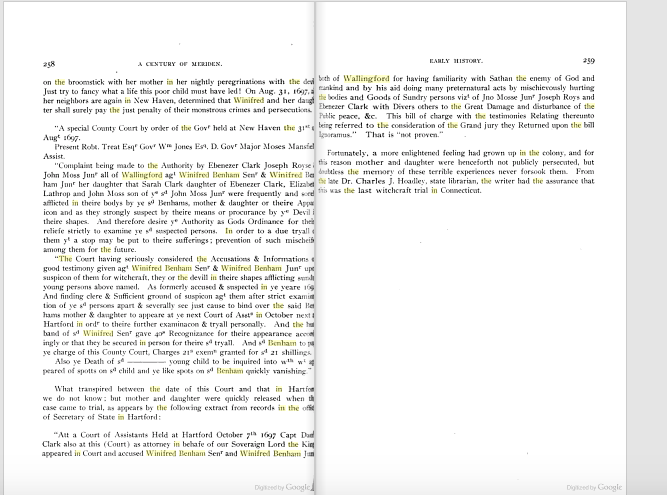
Winifred King was born in 1637 and died in 1697.  I do not have a date for when she married Joseph Benham but the first date I have for a child born to them is 1669.   The thing that happened to Winifred that makes her special to me is that she was put on trial for witchcraft.  In fact hers was the last known witch trial in the state of Connecticut.   One of her daughters was also put on trial with her.  Fortunately they were  not found guilty.  The reason she was put on trial for witch craft was because her husband angered the politically powerful in the town they resided in by criticizing them and in retaliation they went after after his family.  One thing that was listed as proof she was a witch was her children were ill with a rash and then they got better and the spots appeared on the neighbor children.   For me,  the women that were persecuted (and some executed) in the early history of our country are women that are to be remembered.  They are innocent victims that are examples of what can happen when places do not maintain the separation of church and state.  There are even people working to get post humous pardons for the women about which more can be learned  HERE and HERE.  There is also a book titled Connecticut Witch Trials that looks good but I have not yet read. Please enjoy the video of an interview with the author of that book below.  And following the video are the pages that go with the title page at the top of this blog.  The book is a local history book of the area of Winifred's trial and explains more about what happened specifically to her.  


Sunday, March 6, 2016

Women In My Family History: Part 4


Luciel Rairigh

1907-1952


 In this segment of my series of Women In My Family History celebrating Women's History Month, I am honoring Luciel Rairigh.  She was the sister of Loyd Rairigh who was my mother's father.  I did not know her as she passed away before I was born but my mother had been especially close to her so I heard many stories about her.  Aunt Luciel had a built up shoe which she needed to wear due to having had polio.  She never married.  She worked in the office at Senger's Dry Goods Store in Peru Indiana.  Luciel had an impact on my life because as a child we moved around the midwest because my father worked for the N&W Railroad and each new place we moved my mother would find a shut in of a polio victim to visit.  Often I went with her and sat in living rooms and played as mom visited with a person in a wheelchair.  I believe these early experiences influenced my choice later to go into nursing and instilled compassion into my make up.  Therefore the reason I decided to honor her in my blog is the impact she had on my life in spite of being gone by the time I was born.  Please follow the link to the site about Senger's store and enjoy the video that follows.  


Saturday, March 5, 2016

Women In My Family History: Part 3


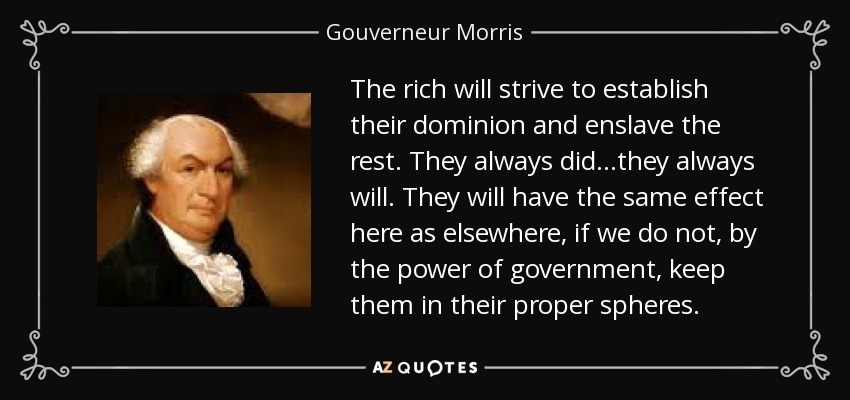
Hannah Hamilton Morris was born about 1740 and I have not found her death date or location. On May 2, 1759 she married David Morris.   Her husband joined the continental army and was captured by the British.  He died on the Prison Ship Jersey in December of 1779.   I blogged about David Memorial Day 2014 and that blog can be found HERE.  Then Hannah's son,  David Hamilton Morris,  left to join the continental army as a drummer boy in either late 1779 or early 1780.   Son David was wounded once but returned to service and served until 1783.  I have always been fascinated that after losing her husband she had to give her young son to the war effort too.  It must have been very hard for her and it has made  me wonder about the sacrifices that the women made in the early history of our country.   The following video is long but well worth the watch.  If unable to watch it all at once I recommend watching it in segments. It can be found HERE on FORA.tv  and is easily watched in segments.  David Hamilton Morris married Eva Ann Sailor and had a daughter named Martha Jane.  Martha married Francis Sullivan and had a daughter named Ammie Sullivan.  Ammie Sullivan I introduced in Part II of this series as the mother of Leona who died shortly after giving birth to my grandfather.  The quote at the top of the age is by Gouverneur Morris.  Hannah had a son named Gouverneur who was a captain in the Jersey Blues under General Anthony Wayne.  The man in the quote was born in 1752 and Hannah's son was born in 1763.  The Morris family was very large and my line was probably a lesser poor relation of the more famous Morris men.  I am not sure of the connections.  A county history does elude to a connection.  Please follow the links in this blog to read my prior blog about the British Prison Ships and to watch the excellent video on women's roles during our revolution.


Thursday, March 3, 2016

Women In My Family History: Part II


Leona Sullivan on her wedding day. 


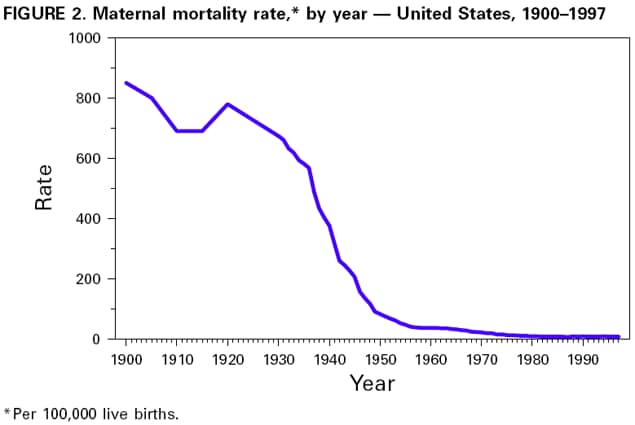
One of the family stories that caught my eye when I first starting working with our genealogy was that of my great grandmother.  Leona Elberta Sullivan was the illegitimate daughter of Ammie Frances Sullivan.  She was born on the sixth of March in 1881.  She was raised by a local church family who took her in and on November 13, 1902 she married and moved into her new home with her husband Oscar Rohrer.  She arrived with her life possessions being a sack of clothes and a guitar slung over her back.  Oscar had a farm in rural Miami County Indiana.  Less than one year later, on the 13th of September 1903,  just six days after she gave birth to my grandfather she was dead.   The following image shows how often this was the case for women who gave birth in that time period.  


The source of this image can be found HERE.

Her life on the farm is one that had to have long days of hard work although there must have been joyful times too. I would love to know what songs she played on the guitar.  I have it and would find a way to have the songs played on it if I knew what they were.   Enjoy the video that follows of some footage of farm life a few years later in the era of 1910 America.  


Tuesday, March 1, 2016

Women In My Family History Part One


Wedding picture of Elizabeth Garber and David Jacobs


In observance of Women's History Month I have decided to do a few blogs that pull out stories of the women in my family history that have interesting things and  stories surrounding them.  The first woman I would like feature is a distant cousin named Lydia Garber.  I have no idea the exact way that  she fits into my family except that we share a common ancestor named John Garber and his wife Barbara.  In the early 2000's I was fortunate enough to correspond with a woman named Gladys Royer from Elkhart Indiana whom,  it is my understanding, has since passed away.  She shared with me information on our common line of the Garber family.   It was Gladys that told me Lydia Garber's delightful story.  

To lay the ground work let me first say that my father's mother's maiden name was Doris Ellen Shively.  Doris's mother's maiden name was Carrie Bell Jacobs.  Carrie's mother's maiden name was Elizabeth Ellen Garber.  Once in the Garber line it goes on back  four generations John, John, Samuel,  and then earliest ancestor in this line on this side of the atlantic Johannes.  Johannes Garber was a Old Order German Baptist  preacher and settled in the Shenandoah Valley of Virginia to start a a church at a place called Flat Rock.  It was Johannes son Samuel's son John that moved on to Montgomery Couty Ohio.   Then John's son John that moved from Ohio to Indiana and then to Illinois.  While in Indiana his daughter Elizabeth married David George Jacobs and later, their daughter Carrie gave birth to my grandmother.   One must back up to the Garber lines that remained in the Flat Rock area of Virginia to somewhere find Lydia.  But here is the story that Gladys wrote to me about her: 


A brick house built before the Civil War stands there today.  When it was insulated by the owners, the limbs were still on the foundation logs.30a  The barn was burned by the Northern Army during the Civil War and was rebuilt after that.31  A descendant, Lydia Garber, lived there during the Civil War and hid three horses in the living room to avoid having them killed or taken.  She threatened the soldiers she would throw hot water on them if they came into the house.


Here is a picture I found online of the house and the link which is the source of that photo.


Photo credit to The Valley Brethren Mennonite Heritage Center  If you follow the link and then click to the next photo at this link there is a picture of the church that Johannes started.  If you click HERE you can follow a link to more information on the nearby mill that is featured in the video that follows. 

I am especially fond of this story because of the strength Lydia showed in the face of danger.  Strong women in my background are always a joy for me to find.   Please enjoy the following video about the area of Virginia referred to in the blog and notice that the mill in the video is near the Garber Homestead at the link provided above. 


History Comes Alive at the Breneman-Turner Mill from Lani Furbank on Vimeo.